Last updated November 21, 2026
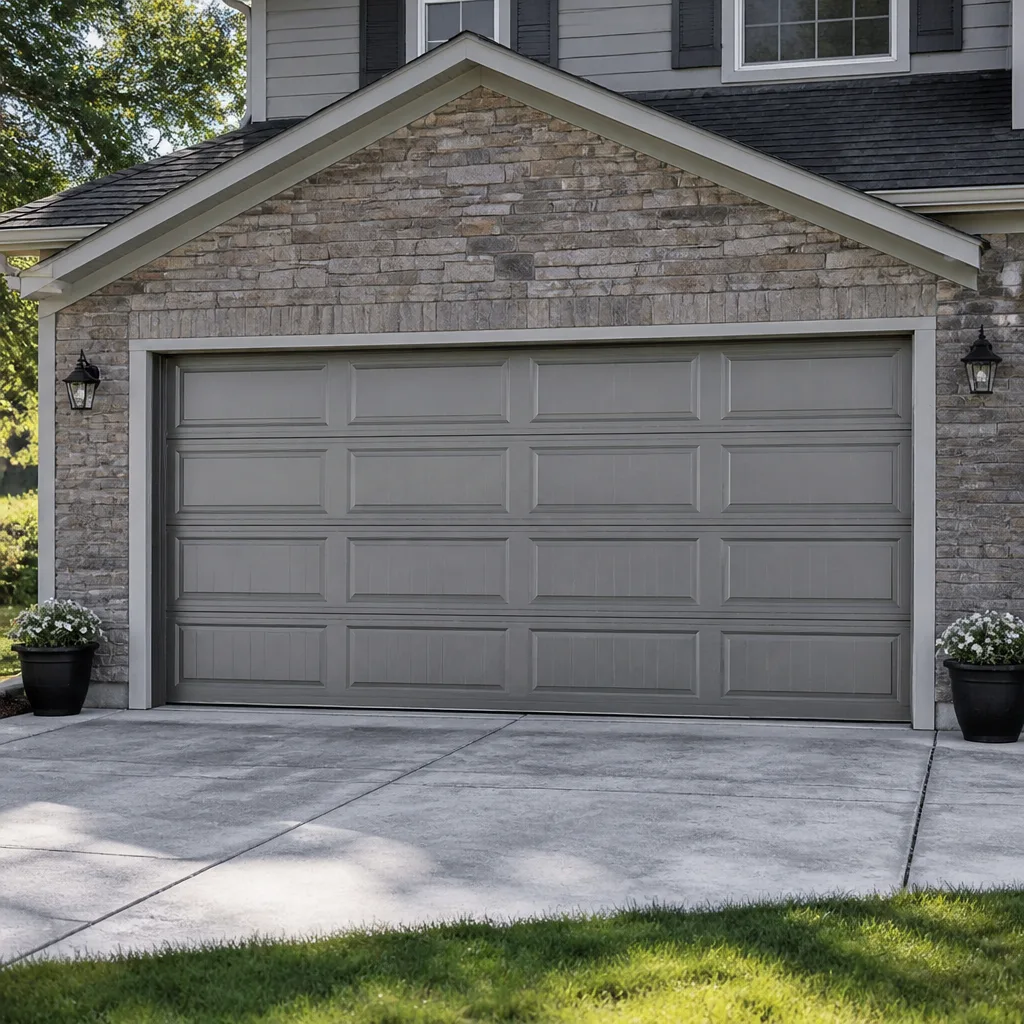 Raised-panel steel
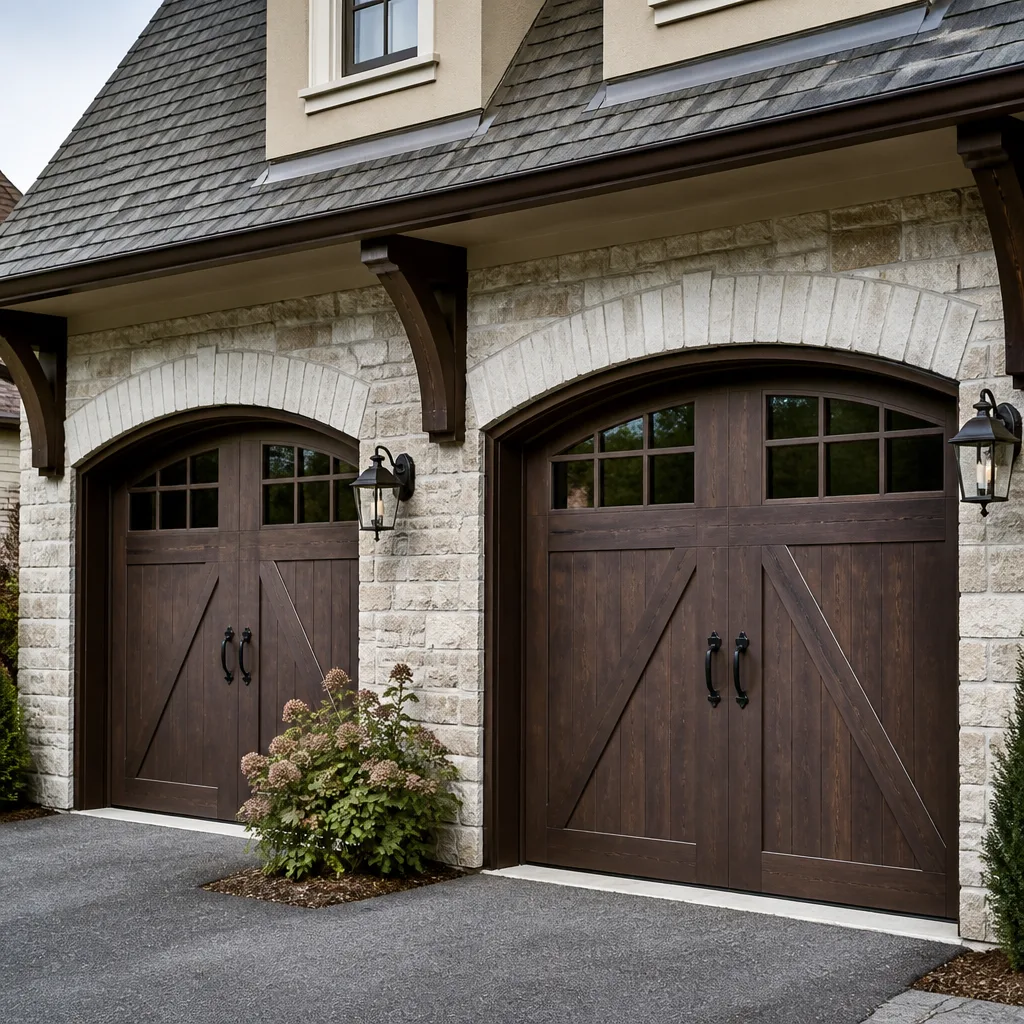 Carriage house
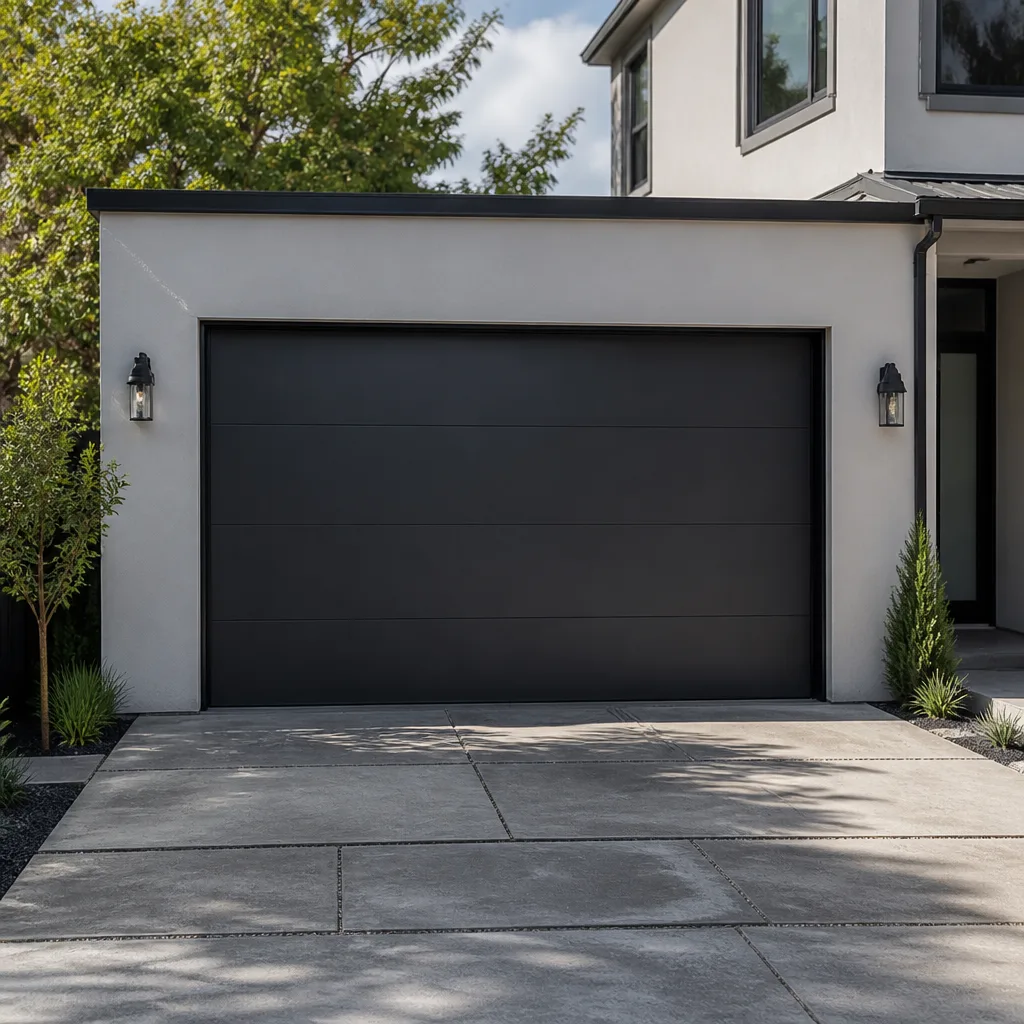 Modern flush
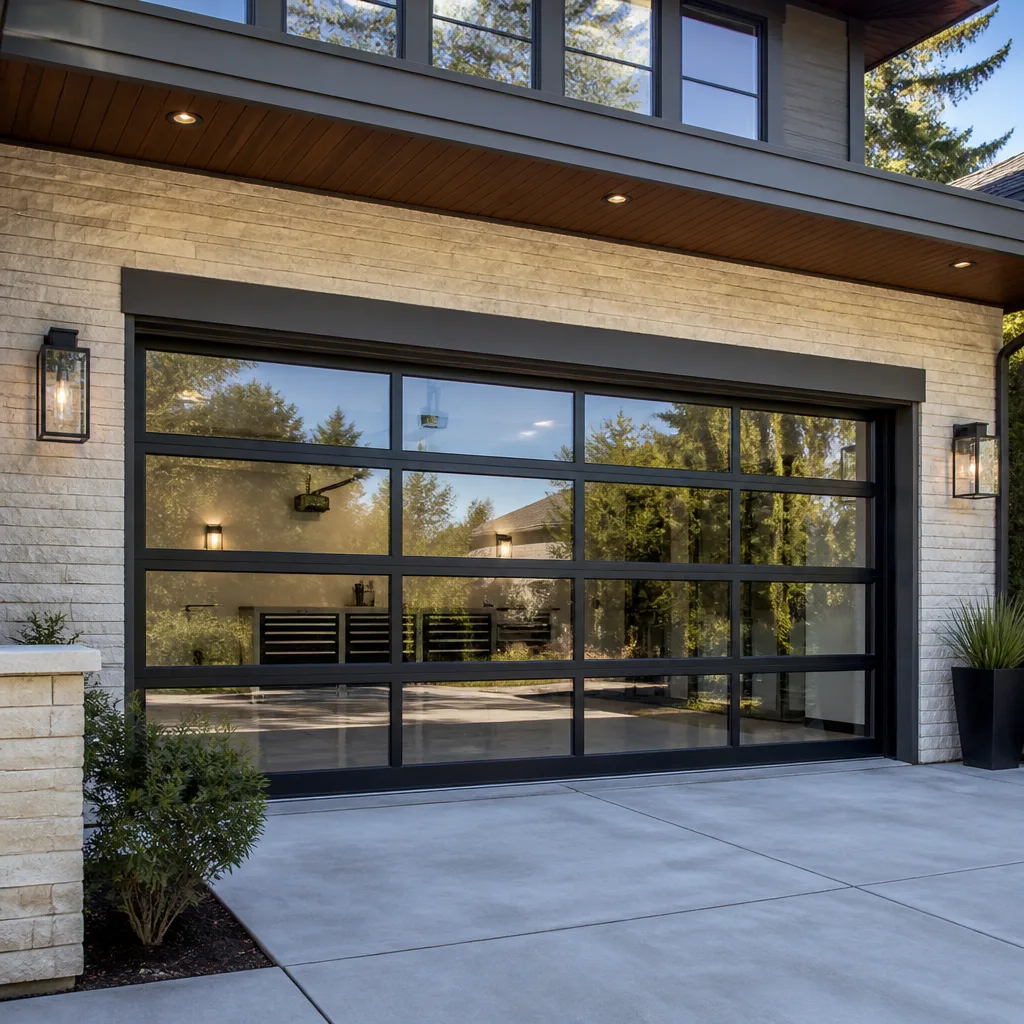 Full-view glass
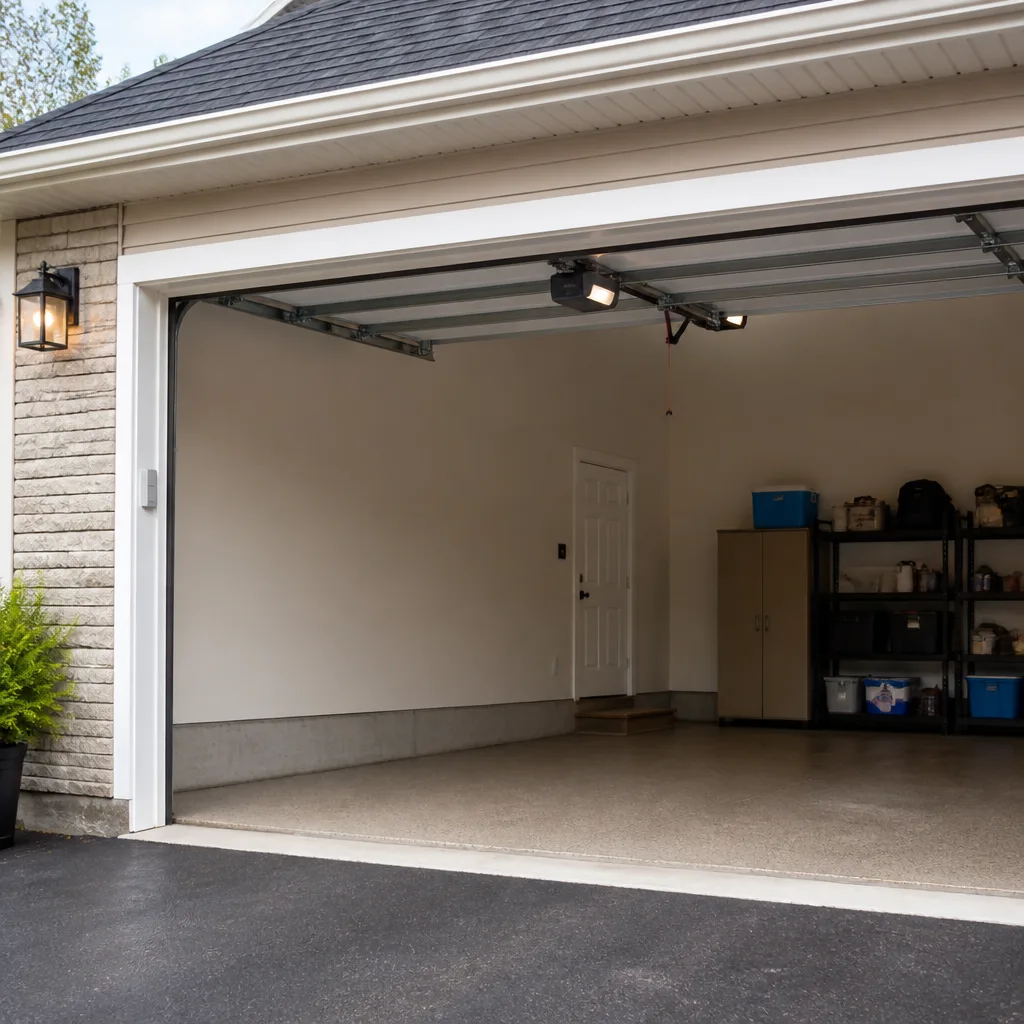 LiftMaster openers
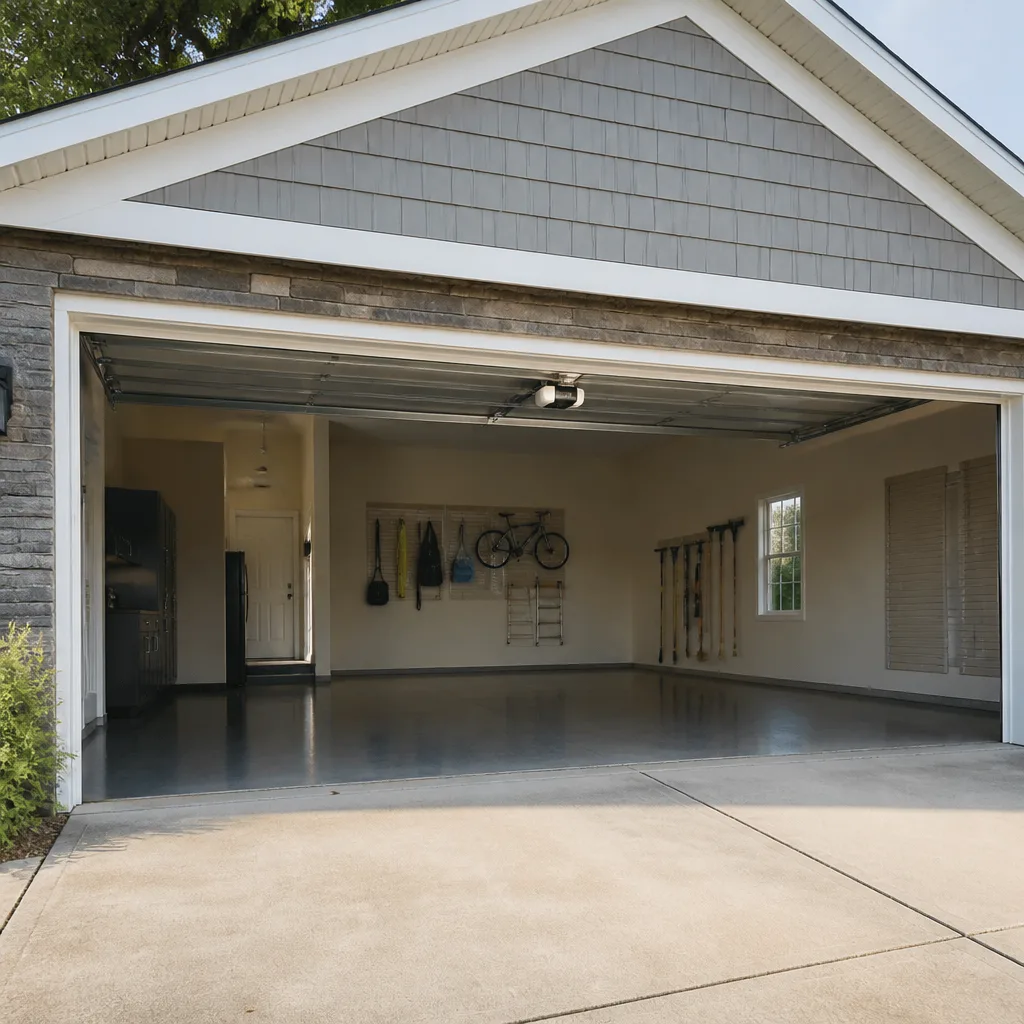 Chamberlain openers
Full 25-point door and opener safety check with every visit - springs, cables, rollers, tracks, and your LiftMaster or Chamberlain opener included
You get a price before we start. It does not change when the pro arrives.
Get your free estimateDIY vs Professional Garage Door: The Kingwood Homeowner’s Decision Guide
Most homeowners who search “DIY garage door repair” are confident they can handle it. And for some tasks, they’re right. But the useful question isn’t “can I do this myself?” It’s “which parts of this job can I do safely, and which parts create liability, warranty voids, or callback costs if I get them slightly wrong?” A torsion spring stores enough energy to cause serious injury when released incorrectly. That’s not a liability disclaimer, it’s physics. This guide breaks the garage door down task by task so you know exactly where the DIY line sits, what tools earn their keep in a Kingwood garage, and when calling a specialist saves you money instead of costing you more.
Quick Answer
Safe DIY garage door tasks in Kingwood include weatherseal replacement, photo-eye sensor alignment, lubrication, and remote or keypad reprogramming. Anything involving torsion springs, cables, bottom brackets, panel replacement, or new opener installation requires a trained technician. Springs and cables are under extreme tension and cause the most serious garage door injuries; opener installation done wrong can void the manufacturer warranty on a name-brand unit.
Styles & brands we work with
- Raised-panel steel
- Carriage house
- Modern flush
- Full-view glass
- LiftMaster openers
- Chamberlain openers
Table of Contents
- The Task-by-Task DIY Split for Kingwood Homeowners
- Why Torsion Springs Are Never a DIY Job
- How DIY Opener Installation Can Void Your Warranty
- The Hidden Cost of a DIY Error in the Kingwood Market
- What Kingwood’s Humidity Does to Your Garage Door
- The Tools and Materials Every Kingwood Homeowner Should Own
- A Simple Seasonal Maintenance Schedule
The Task-by-Task DIY Split for Kingwood Homeowners
Not every garage door problem needs a technician, and pretending otherwise wastes your money. Here’s the honest line between what you can handle and what you shouldn’t touch.
Safe to DIY
- Weatherseal replacement – the rubber strip along the bottom and sides of the door. It slides into a track or fastens with screws. A few hand tools and twenty minutes.
- Photo-eye sensor alignment – if your door reverses for no reason, the two small sensors near the floor are usually knocked out of line. Straighten them so the indicator lights stay solid.
- Lubrication – hinges, rollers, and the torsion bar bearings benefit from a proper garage door lubricant a couple of times a year.
- Remote and keypad reprogramming – changing codes or pairing a new remote is a manual-and-buttons job, whether you own a LiftMaster or a Genie unit.
- Visual inspection – look at cables for fraying, springs for gaps, and hinges for wear. Spotting a problem early is free.
Requires a technician
- Torsion spring replacement – the single most common garage door failure and the most dangerous to attempt.
- Cable replacement – cables carry the door’s weight under tension alongside the springs.
- Bottom bracket and drum work – these hold the cable under load and can release violently.
- Panel replacement – a dented or cracked section sounds simple until you’re balancing a hundred-pound panel alone.
- Opener installation and motor replacement – wiring, force calibration, and safety reversal testing all matter here.
- Track realignment – a bent track affects every roller on the door and often hides a deeper structural issue.
In our experience, the DIY tasks above are genuinely worth learning. Everything on the second list is where homeowners end up calling garage door repair anyway, sometimes after a small problem has grown into a bigger one.
Why Torsion Springs Are Never a DIY Job
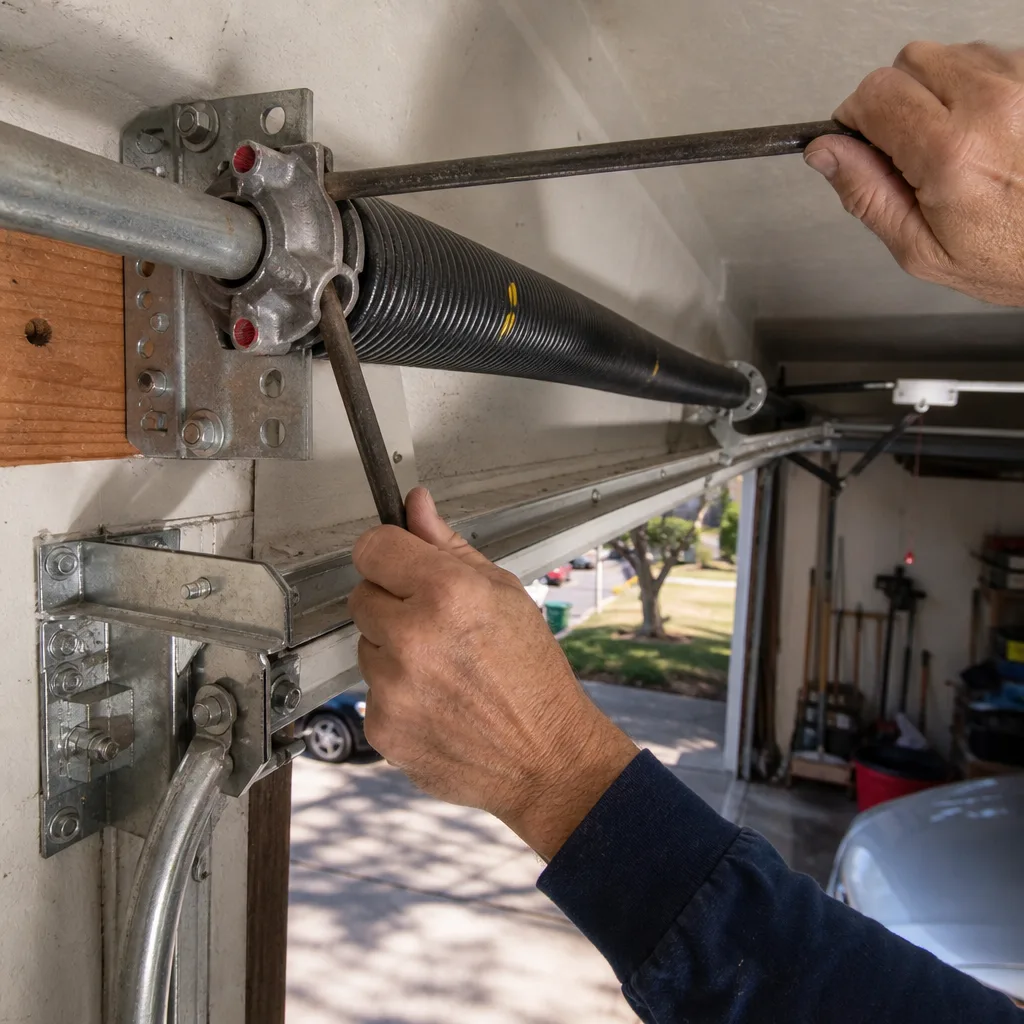
A torsion spring is a coiled steel bar that has been wound to hold the entire weight of your garage door. When a technician winds a spring, they’re storing energy measured in hundreds of foot-pounds. When it snaps – through fatigue, or through an incorrect adjustment – that energy has to go somewhere. It releases instantly.
This is the mechanical reason spring work isn’t a skill question. It’s an energy question. A YouTube video can show you the winding bars and the turns, but it can’t give you the feel for when a spring is near failure, or the muscle memory to keep your hands clear when the bars kick back. Garage door springs cause the most serious injuries in this trade, and the number of homeowners who’ve watched a tutorial and still ended up hurt is exactly why professionals treat this as safety-sensitive work.
What actually fails
- The spring itself – most torsion springs are rated by cycle count, and a door that opens twice a day wears through those cycles faster than you’d expect. A visible gap in the coil means the spring has broken.
- The winding hardware – set screws can slip on an under-tensioned spring, and a bar that spins free is dangerous.
- The cable – when a spring gives way suddenly, the cable on that side can snap too, and it whips.
Spring replacement is a dedicated service for a reason, not an upsell tacked onto a general repair call. When a spring fails in a Kingwood garage, the door becomes unusable and the vehicle inside is stuck. That’s a same-day situation for a trained technician with the right springs on hand, and it’s not a situation to work through yourself with rented tools.
How DIY Opener Installation Can Void Your Warranty
Opener manufacturers set installation requirements for a reason, and one of the biggest mistakes we see is a homeowner installing a new LiftMaster or Chamberlain unit themselves, then discovering the warranty won’t cover a motor failure a few years later. Most name-brand opener warranties require installation according to the manufacturer’s specifications and by a qualified installer – and an improperly installed unit that fails early often falls outside that coverage.
The warranty issue matters most with smart openers. Wi-Fi-connected units from LiftMaster and Chamberlain include a control board that’s sensitive to incorrect wiring, and a reversed polarity connection can take that board out. On a traditional Genie or Craftsman unit, the risk shifts to the safety-reversal system – the opener’s built-in testing that stops the door if it meets resistance. Set that wrong and you’ve introduced a safety hazard, not just an inconvenience.
The hidden DIY failures on opener installation
- The opener is mounted off-center, so the rail flexes and the motor strains on every open.
- The force limits are dialed up to compensate for a binding door, which defeats the safety reversal.
- The travel limits are set so the door hits the floor hard, damaging the bottom seal and the door itself.
- The wall control is wired into the wrong terminal, and the light or lock function doesn’t work.
- The photo-eye sensors are mounted above the door’s path or facing the wrong direction, so the safety system doesn’t trip when it should.
When these go wrong, they don’t always show up on day one. They show up when the motor burns out at year three and the warranty claim gets denied because the installation wasn’t done to spec. Our garage door opener repair work covers all of these brands, and we can tell you quickly whether a door is worth repairing or needs a new opener.
The Hidden Cost of a DIY Error in the Kingwood Market
Here’s the part most DIY guides skip: what you pay when it goes wrong. A garage door contractor in Kingwood charges a service call plus a per-job rate for repairs, and a callback after a DIY attempt often costs more than the original professional repair would have. Not because the technician is penalizing you, but because they now have to undo the incorrect work before they can do the correct work.
Where the money actually goes
- Spring replacement – typically in the range of a few hundred dollars per spring, and a matched pair is usually replaced together, roughly double that. A broken door spring is typically a same-day job when the technician has the springs on hand.
- Opener repair – gear and sprocket replacement, control board work, and travel limit resets. The cost depends entirely on what was damaged and whether the unit is still serviceable.
- Panel replacement – a damaged panel often needs a matching panel from the manufacturer, which means a special order if your local supplier doesn’t stock that model.
- Track realignment – straightforward on its own, but if a DIY attempt bent a hinge or crushed a roller, that adds up.
The pricing in Kingwood follows the broader Houston market, and how it works is simple: you get a written quote before any work starts, and the written quote is the price. Our technicians quote the job, explain what caused the failure, and don’t touch a tool until you’ve agreed. When a homeowner has already attempted a repair, the quote reflects the extra labor to correct the damage underneath.
Comparing the two paths
- Professional job, done right the first time: one service call, one written price, one visit.
- DIY attempt, then professional repair: materials you bought and can’t return, the original service call, the correction work, and possibly a second trip if parts need to be ordered.
- DIY attempt that damages a panel or opener: disposal of the damaged part, a special order, and installation labor.
Our technicians have up to 9 years of experience, and the pattern they describe over and over is the same: the DIY mistake wasn’t a mistake in technique. It was a mistake in choosing which task to attempt.
What Kingwood’s Humidity Does to Your Garage Door
Kingwood sits in a humid subtropical climate with hot summers, mild winters, and a lot of moisture in the air most of the year. That doesn’t make your garage door unsafe, but it does change what wears out first, and it’s why the maintenance tasks you can do yourself actually matter more here than in drier parts of the country.
What the moisture touches first
- Steel hinges and rollers – rust starts in the tight spaces you don’t see until a hinge seizes. A garage door lubricant with a rust inhibitor is worth the extra couple of dollars over a generic spray.
- Weatherseal – rubber and vinyl seals harden and crack faster in heat and humidity. A cracked bottom seal lets water and pests in, and it’s the simplest DIY fix on the list.
- Wooden doors and trim – if you have a wood or wood-composite door, the lower panels and edges absorb moisture and need repainting or resealing more often than in dry climates.
- The garage interior – humidity inside an attached garage in Kingwood can stay high even on mild days, and it’s the reason we recommend ventilating the space or running a dehumidifier if your garage shares a wall with living space.
What the climate doesn’t change is the spring. Temperature swings don’t cause torsion springs to snap – cycle count and fatigue do. Mild winters here mean the door sees more open-and-close cycles across a year than a cold-climate door does, so cycle-rated spring wear is the number that actually predicts failure. If your spring has broken and the door won’t lift, it’s not a weather problem; it’s a spring problem. That’s when you want a specialist who keeps springs in stock rather than a generalist ordering one.
The Tools and Materials Every Kingwood Homeowner Should Own
A modest kit handles every safe DIY task on the list. None of it is expensive, and all of it keeps the door quieter and lasts longer.
For lubrication and routine maintenance
- Garage door lubricant – a lithium-based or silicone spray specifically formulated for garage doors, not WD-40’s standard penetrating oil, which attracts dust.
- A clean rag and a soft brush – for clearing grit out of the track before lubricating.
- A step ladder – never the door itself, and never balance on a chair.
- Work gloves and safety glasses – non-negotiable for any task that involves looking up at the springs and cables.
For weatherseal replacement
- Bottom seal – buy the correct profile for your door type: a T-style seal for most steel doors, a U-style or bulb seal for others. Measure the width of the door before you order.
- Side and top seals – these go on the door frame, not the door, and are usually the first place drafts and moisture creep in.
- A utility knife, a tape measure, and a drill with a driver bit – for trimming the seal to length and driving the fasteners.
For sensor and remote troubleshooting
- A small level – photo-eye sensors need to face each other squarely, and a level is faster than eyeballing it.
- The opener manual – whether you own a LiftMaster, Chamberlain, Genie, or Raynor, the manual has the exact programming sequence, and it’s the fastest way to avoid a wrong code entry.
- A multimeter – for confirming the sensor wiring isn’t the problem before you assume it’s the sensor.
None of this gets you near a torsion spring, and that’s the point. The kit is for the work that’s genuinely yours to do.
A Simple Seasonal Maintenance Schedule
Garage doors don’t need a lot of attention. They need consistent attention. Here’s a schedule that takes about fifteen minutes per season and catches most problems before they become emergency calls in Kingwood.
Every spring
- Lubricate hinges, rollers, and the torsion bar bearings with garage door lubricant.
- Look at the bottom weatherseal for cracks and replace it if it’s hardened.
- Wipe the tracks clean of grit with a damp rag – don’t lubricate the tracks themselves.
- Run the door up and down and listen. Grinding, popping, or a door that slows partway is a call for service.
- Press the wall control with the door open and put a hand lightly on the door’s leading edge as it closes. If it doesn’t reverse, the safety system needs attention.
Every fall
- Inspect the springs visually for gaps in the coil and signs of rust.
- Check the cables on both sides for fraying – if you see broken strands, stop using the door and call.
- Test the photo-eye sensors by blocking one with your hand while the door closes; the door should reverse immediately.
- Wipe down steel hinges for rust spots and apply a fresh coat of lubricant.
- Check the door balance by disconnecting the opener and lifting the door halfway. It should stay. If it drops or rises, the springs are out of balance and need a technician.
This schedule doesn’t replace professional service – it reduces it. A door that’s been lubricated and visually checked through the year is a door that fails less often and fails safely. When something does fail, our full garage door installation work and repair service covers every step, from a single spring to a brand-new door.
Common Mistakes to Avoid
- Winding a torsion spring yourself because the video made it look easy. The video doesn’t show the moment the bar slips. Spring work is safety-sensitive, full stop, and it’s the one part of this job where the professional line is firm.
- Lubricating the tracks. Track lubrication attracts dust and grit, which is what jams rollers. Lubricate the rollers and hinges, wipe the tracks clean, and leave them dry.
- Pulling a stuck door open by hand. If a spring has snapped, the door is heavier than it’s ever been. Forcing it puts your back and shoulders at risk, and it can bend a track if it binds on the way up.
- Installing a new opener without checking the door’s balance first. A new motor bolted onto a binding door will strain and fail early, and the warranty may not cover it because the installation wasn’t done to spec.
- Buying the wrong weatherseal profile. Doors don’t take universal seals. Measure the door thickness and the channel type, and buy the matching profile – the return trip is the most annoying part of a five-minute job.
- Bypassing a safety reverse to get the door to close. A door that won’t reverse is a hazard to kids, pets, and anything in its path. If the reversal system is faulty, stop using the door and get it repaired.
- Assuming a broken spring means the opener is dead. A common and expensive DIY misdiagnosis in Kingwood. If the door won’t lift but the opener light works and the motor spins, the spring is almost certainly the problem, and it’s a spring repair – not a new opener.
See the difference
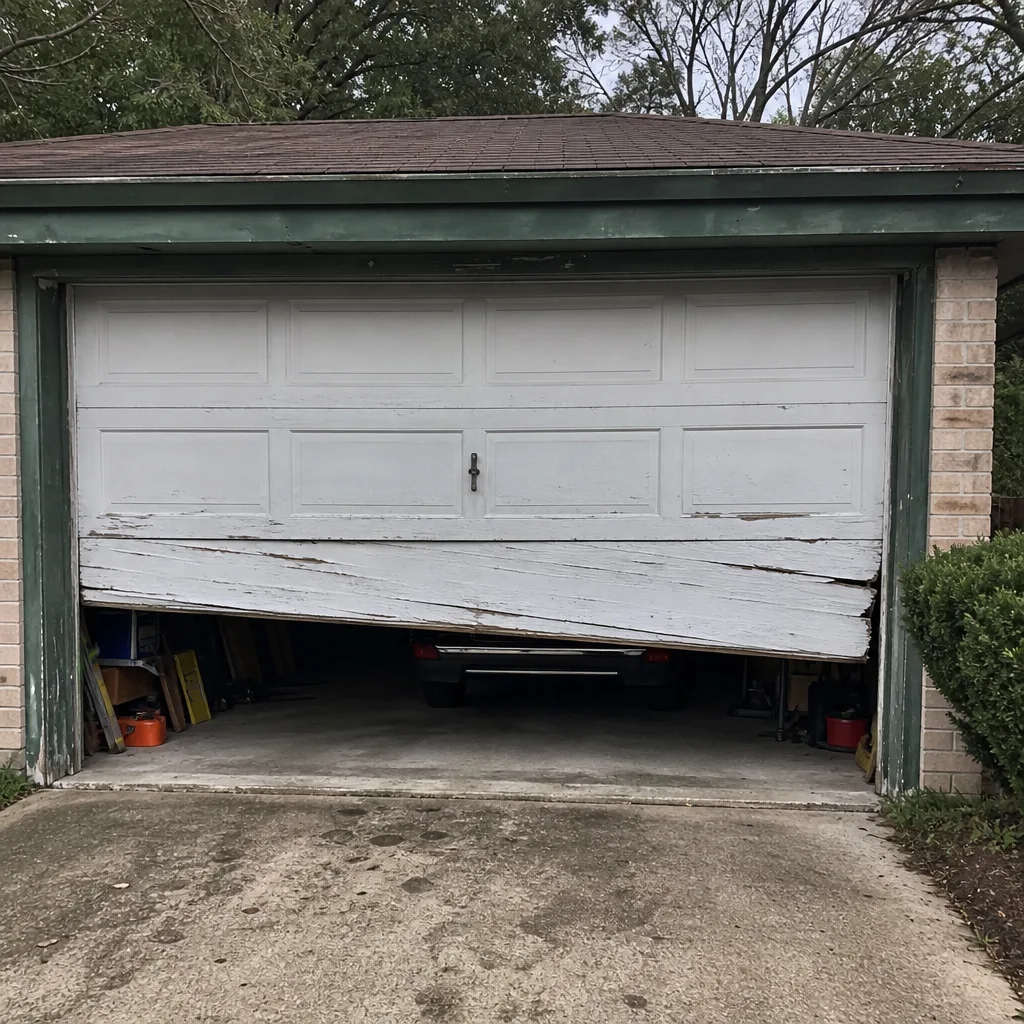 Before
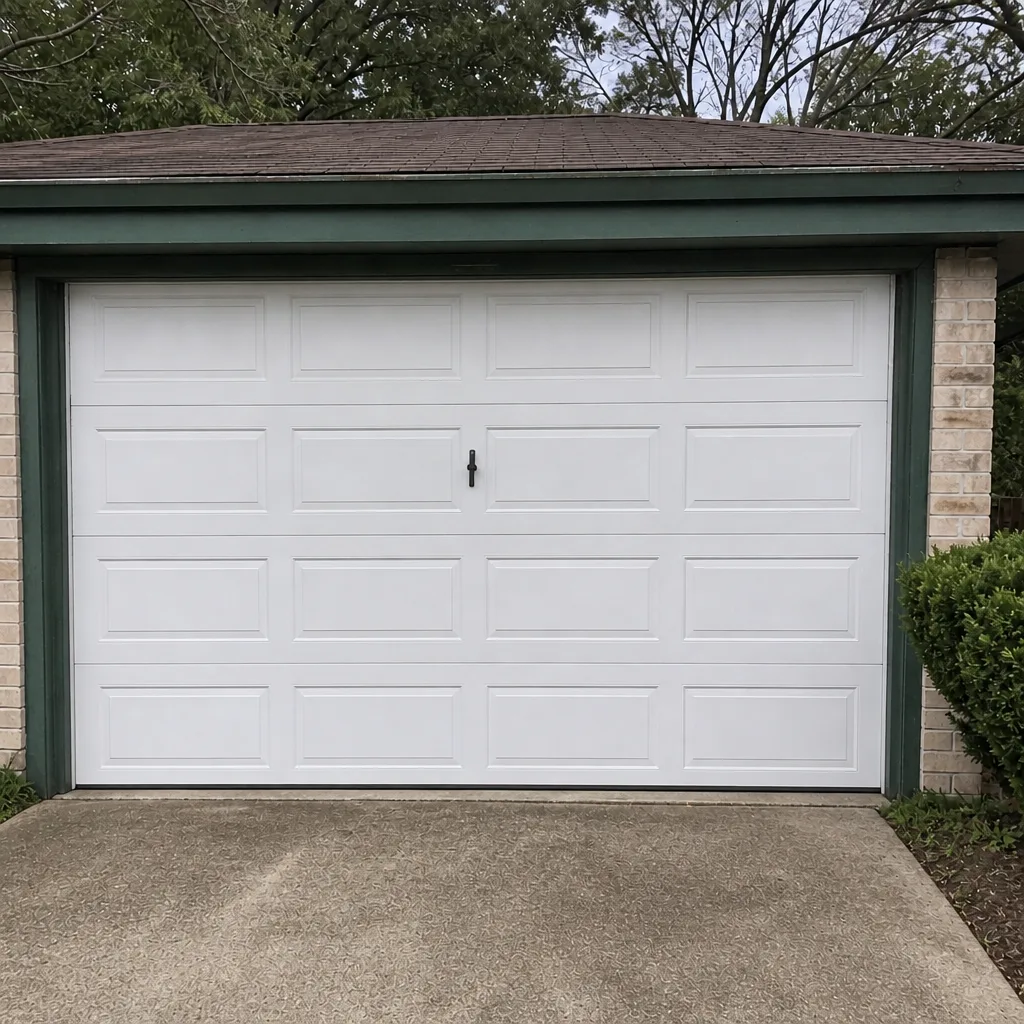 After
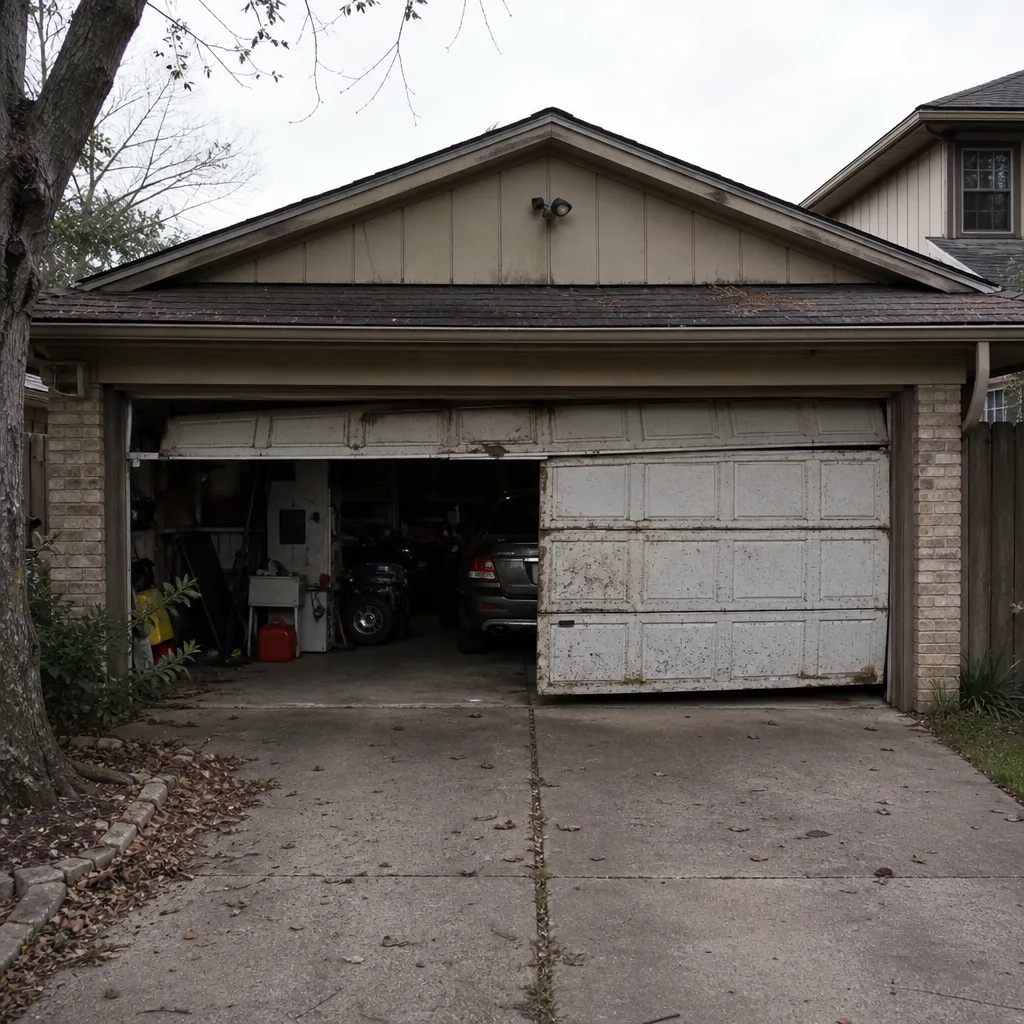 Before
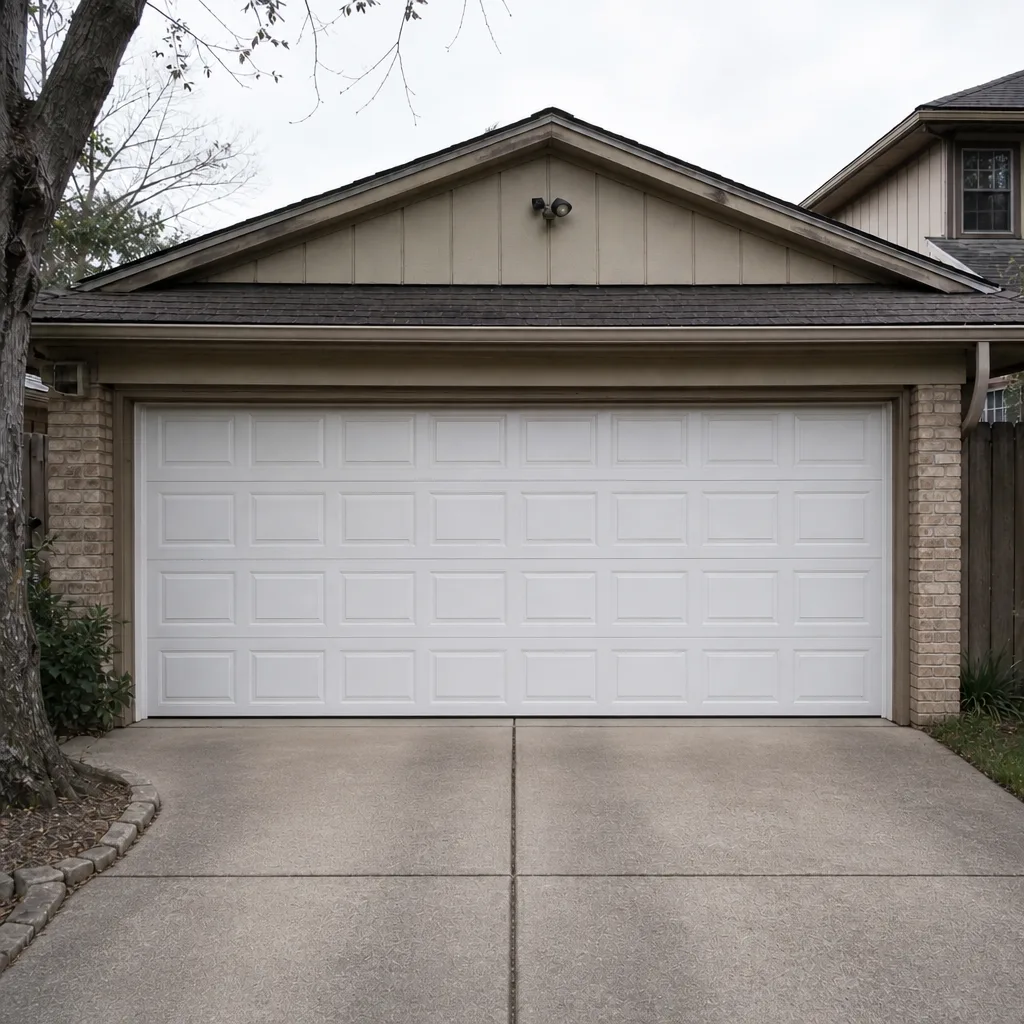 After
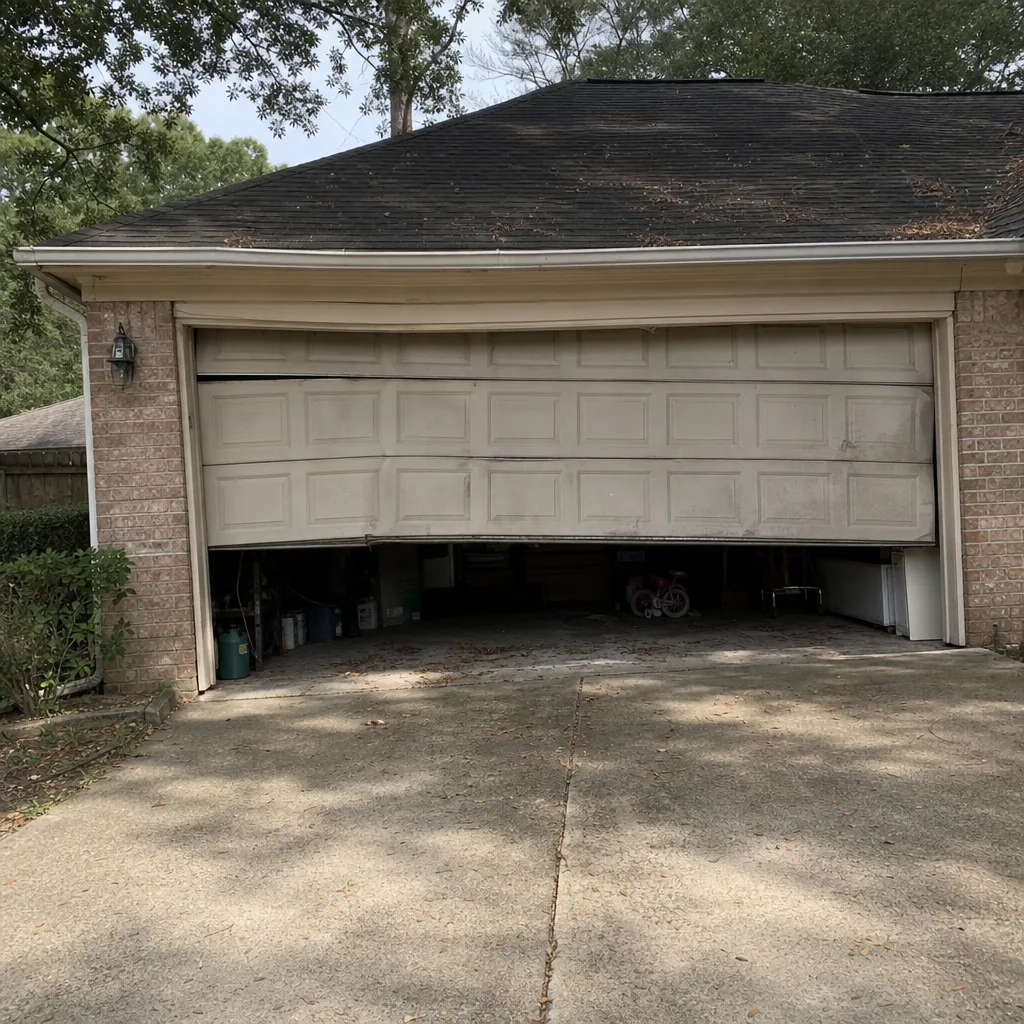 Before
 After
When to Call a Professional
Call a technician the moment you suspect a torsion spring, cable, or bottom bracket issue. Those parts carry the door’s full weight under tension, and the risk isn’t worth the money you’d save. Call if a door has come off its track, if a panel is bent or cracked, if the door reverses for no reason after you’ve cleaned and straightened the sensors, or if you’re replacing an opener. Call before you buy anything, too – a specialist who services your brand can confirm the right spring, the right opener, and the right panel from what’s already installed.
Kingwood Garage Door Repair offers free estimates in Kingwood – call (888) 853-9961. Our prices are quoted and agreed before any work starts, and the written estimate is the price you pay.
Frequently Asked Questions
No. Torsion springs store enough energy to cause serious injury when released incorrectly, and winding or unwinding one requires the right bars, a feel for the tension, and a spotter. Spring repair is safety-sensitive work that needs a trained technician. If your spring has broken, call (888) 853-9961 and we’ll quote the repair before we start.
It can, yes. Most name-brand opener warranties require installation according to the manufacturer’s specifications and by a qualified installer. An incorrect installation that causes a motor or control board failure commonly falls outside that coverage. Our opener repair covers LiftMaster, Chamberlain, Genie, and Craftsman units, and we can install a new one to spec so the warranty stays intact.
Weatherseal replacement, photo-eye sensor alignment, lubrication of hinges and rollers, and remote or keypad reprogramming are all safe to handle at home with basic tools. Visual inspection for visible spring gaps or frayed cables is also fine – just don’t touch the parts themselves.
Often, yes. A stuck door – usually a broken spring – is the type of call we handle same-day, and fast dispatch runs from 7am to 7pm. Call (888) 853-9961 and we’ll tell you what’s available and give you a free estimate. If it’s a weekend, we’re closed on Saturday but can book you for Sunday.
No. The technician quotes the job, explains what caused the failure, and doesn’t start work until you’ve agreed to the written price. If a DIY attempt has damaged parts underneath, the quote reflects that correction work, but the number you agree to is the number you pay. Free estimates are always available.
The local professionals we connect you with are state-licensed and insured as Texas requires, and they work on the systems you already own, including Raynor and Genie equipment. You get a trained technician who diagnoses the problem on the first visit – not a generalist guessing. Call (888) 853-9961 to book an estimate.
The Bottom Line
DIY garage door work isn’t a question of skill. It’s a question of risk and warranty. Weatherseal, sensors, lubrication, and remotes are yours to handle, and doing them consistently keeps a Kingwood door quiet and safe between professional visits. Torsion springs, cables, bottom brackets, panel replacement, and opener installation are technician work – not because the work is mysterious, but because the consequences of a small error are high and a warranty claim after a DIY install can come back empty. When a job crosses that line, the goal is one correct repair with a written price quoted and agreed before any work starts. Call (888) 853-9961 for a free estimate.
Written by the team at Kingwood Garage Door Repair.